AI Software Development in Dubai: Trends Every Business Should Know

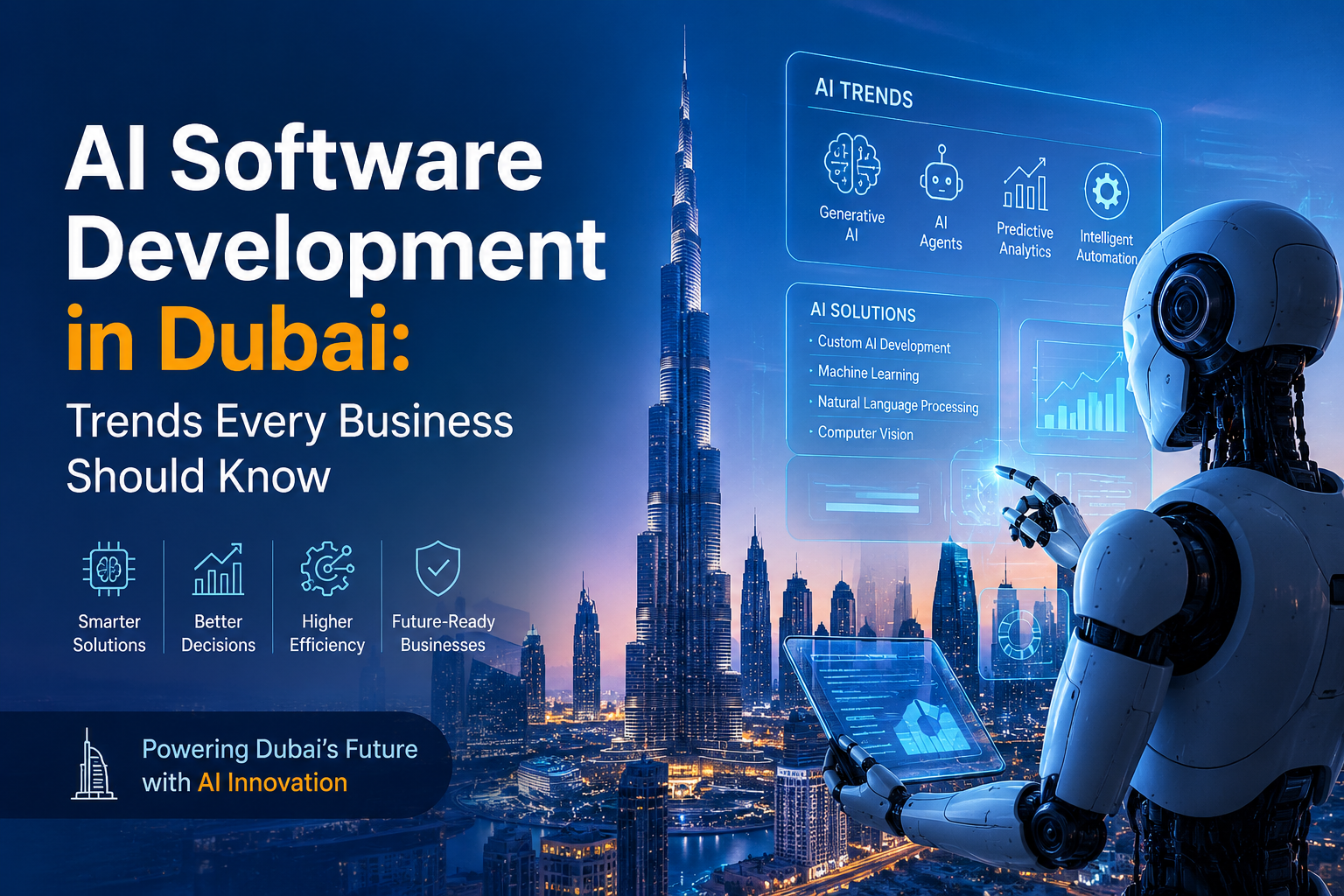
Dubai isn't just trying out new tech anymore. It's actively setting the baseline for how modern enterprise systems ought to be engineered. Between top-down pushes like the Dubai Universal Blueprint for Artificial Intelligence and aggressive digital economy targets, regional IT teams are tearing down old software Playbooks. Simple, pre-written automations just won't cut it. To stay in the game today, you've got to bake intelligence directly into the core code.
If you're laying out your technical roadmap for the next few years, understanding where ai software development in Dubai is heading isn't optional - it's survival.
1. Ditching Rigid Rules for Autonomous AI Agents
For decades, software ran on simple conditional logic: if a user clicks X, system fires off Y. That setup is breaking down under the weight of modern supply chains, real estate platforms, and financial compliance workflows.
This operational wall is precisely where AI Agent Development comes into play. Instead of following pre-scripted paths, multi-agent frameworks leverage LLMs and reasoning models to parse chaotic data, negotiate multi-step workflows, and make calls on their own. Take Jebel Ali's shipping hubs: agentic systems now track freight delays, adjust routing costs, and redirect cargo automatically without waiting around for human approval.
2. On-Prem Sovereign Models for Zero-Trust Compliance
In the UAE, data privacy isn't a suggestion - it's strict law. Regulations around data residency mean banks, government agencies, and healthcare providers can't just route sensitive customer data through public cloud APIs hosted overseas.
That's why enterprise teams are doubling down on enterprise ai solutions built around localized, open-source models like Abu Dhabi's Falcon architecture. Any reputable artificial intelligence development company working in the region now focuses on private, containerized model setups. By hosting these models on local data centers, companies get all the predictive power of machine learning without a single byte of private data leaving the country.
3. High Demand for Bespoke AI Application Development
Standard, off-the-shelf SaaS tools almost always hit a wall in the Gulf. They aren't engineered for local enterprise workflows, struggle to connect with regional payment switches, and frequently fall short on strict UAE data residency regulations.
This friction is fueling massive demand for custom ai application development. Companies are dropping bloated, static platforms in favor of modular microservices. Combining custom user interfaces with tailored machine learning development pipelines lets businesses tackle hyper-specific headaches like automating property appraisals across DIFC or catching sophisticated fraud in local fintech apps.
The momentum is real. The enterprise artificial intelligence market in the UAE is expected to reach a projected revenue of US$ 4,783.2 million by 2030 as adoption accelerates across key industry sectors.
4. Generative Code Refactoring for Legacy Systems
Scrapping core systems entirely sounds great on paper, but in reality, it's a budget-destroying nightmare. So, instead of starting from scratch, tech leaders are bringing generative ai development straight into their existing codebase.
Engineering teams use specialized generative tools to audit old legacy code, generate documentation on the fly, refactor clunky logic into modern languages, and auto-build test suites. It slices through technical debt, letting old legacy systems talk to modern AI pipelines without forcing a multi-year teardown.
5. Edge Telemetry Meets Centralized ML
Dubai's infrastructure push revolves around connected devices, smart towers, and automated transport. Any software handling this environment has to digest massive streams of real-time sensor data without crashing.
Top engineering groups delivering AI & ML development services are pairing edge computing with central training pipelines. By running lightweight models right on local hardware, systems process split-second decisions at the source - like alerting grid engineers to equipment failure - while feeding clean data back to central data lakes to keep the models sharp.
Finding the Right Engineering Partner
Plugging intelligent features into an enterprise platform takes far more than hooking up a few basic APIs. You need architectural discipline, serious security protocols, and an intimate understanding of UAE regulatory boundaries.
Bringing real intelligence into core operations isn't something you hack together overnight. It takes serious engineering discipline and a solid grasp of local regulatory boundaries. Teaming up with a reliable custom software development company Dubai businesses trust gives you that structural foundation. Having an experienced enterprise software development team in your corner means you stop chasing tech headlines and start building tools that deliver actual financial returns.
Final Thoughts
The pace of ai software development in Dubai is relentless. We've moved past speculative test projects into the era of core operational reliance. For business leaders, adapting to these architectural shifts isn't about chasing headlines - it's about building software that is intelligent, resilient, and locally compliant by default. The teams investing in flexible, secure, agentic architectures today will be the ones running the market tomorrow.
Seasia Infotech
Need some guidance? You've come to the right place. Here, you'll learn more about agency performance, verified client trust, and proven software partnership strategies.
.png)